How-to guide

How to inject subcutaneously.

The subcutaneous (subq) shot is the most common way research peptides are administered, a tiny insulin needle into the layer of fat just under the skin. Here's the whole routine, start to finish.

Beginner friendly5 minute readInsulin syringe

Read first. This is general educational information, not medical advice, and the peptides referenced on this site are sold strictly for research use only. Talk to a licensed healthcare provider before injecting anything, and never share needles.
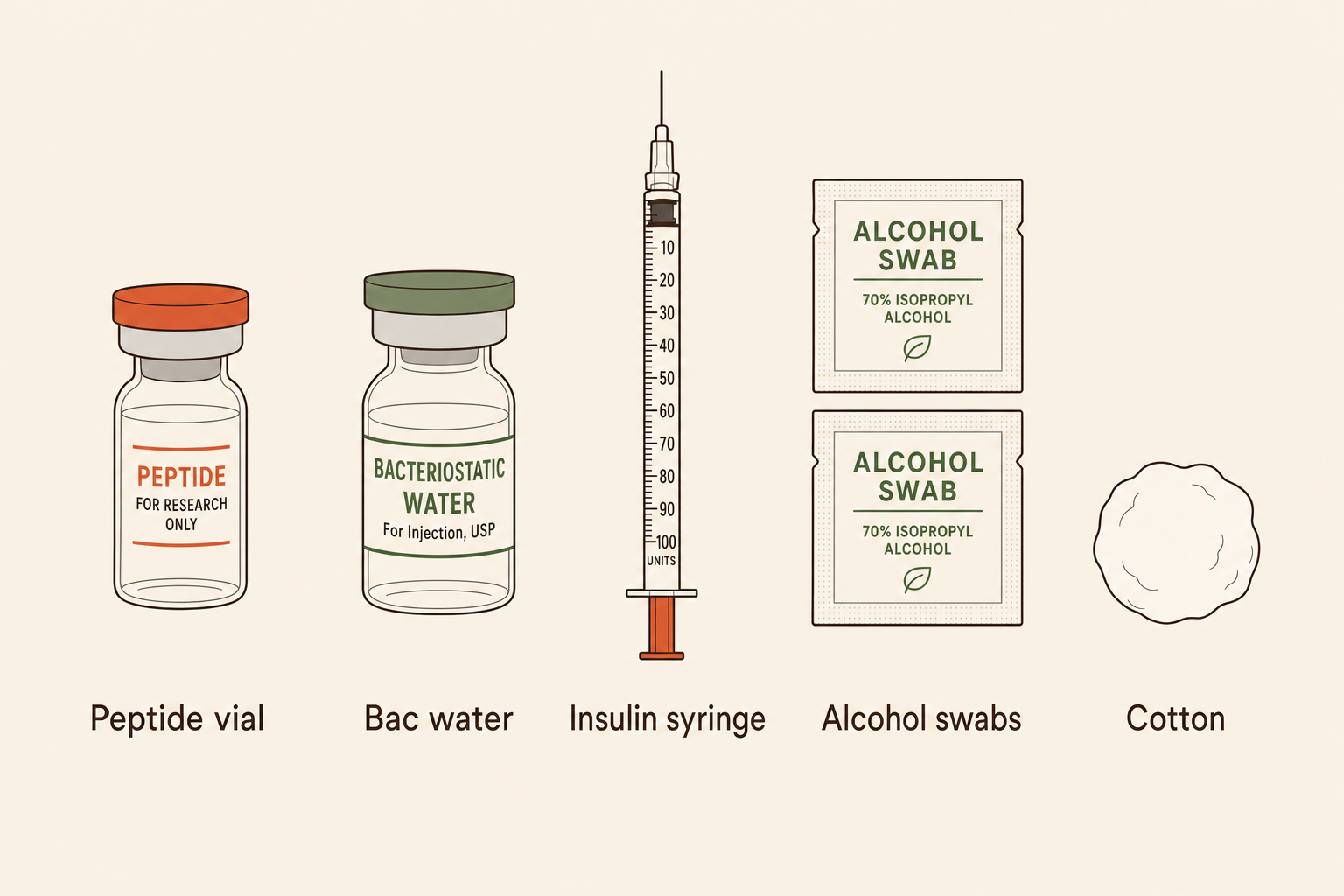
Subcutaneous injection supplies laid out: vial, insulin syringe, alcohol pads, sharps container

Everything you need for a subq injection. Wash your hands before you touch any of it.

Step 1 · Gather

What you'll need.

Lay everything out on a clean surface before you start. Sterile technique is the single most important habit, more important than getting the dose perfect.

  • Your reconstituted peptide vial (kept in the fridge)
  • Bacteriostatic water, if you still need to mix it
  • A U-100 insulin syringe (29–31 gauge, 5/16\" or 1/2\")
  • Alcohol prep pads
  • A sharps container for safe disposal
Drawing peptide solution from a vial into an insulin syringe

Draw to the unit mark our calculator gives you. Tap out any air bubbles.

Step 2 · Draw

Draw your dose.

Swab the rubber stopper of the vial with an alcohol pad and let it dry. Pull the plunger to your target unit mark to fill the syringe with air, push that air into the vial, then invert and draw your dose.

  1. Wipe the vial stopper and let it air-dry
  2. Draw air equal to your dose, then push it into the vial
  3. Invert the vial and pull your exact units (use the calculator if unsure)
  4. Flick out air bubbles and nudge them back into the vial
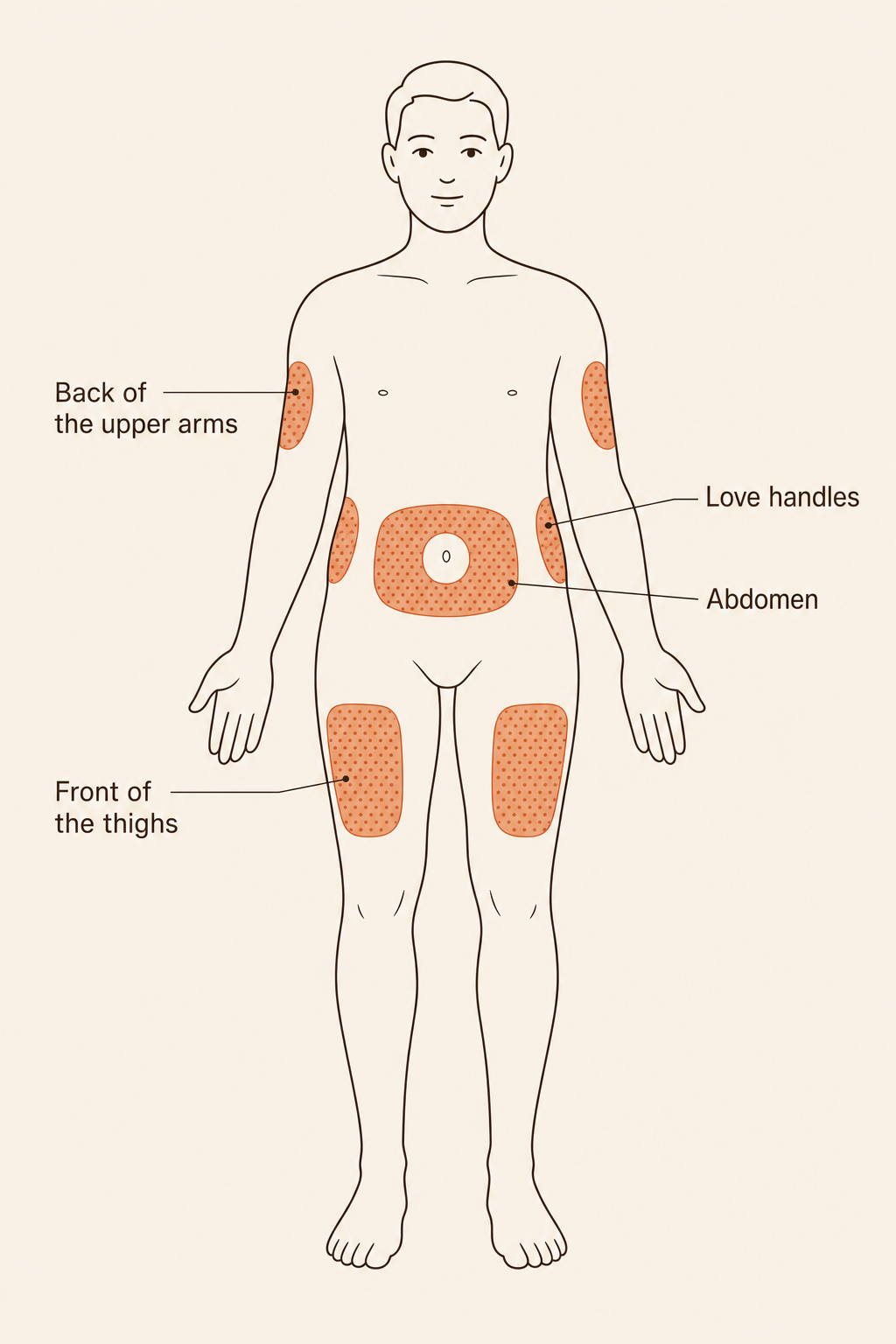
Body diagram showing subcutaneous injection sites: abdomen, love handles, thigh, upper arm

The four go-to subq sites. Stay at least two inches away from your navel.

Step 3 · Where

Where to inject.

Subq injections go into the fatty layer just under the skin, not into muscle. The easiest, most forgiving spots have a bit of pinchable fat and stay away from major vessels.

Rotate sites every single time so no area gets sore, bruised, or lumpy. A simple rotation around the belly is all most people need.

  • Belly: about two inches either side of the navel
  • Love handles: the flank, easy to pinch
  • Front of the thigh: the meaty upper area
  • Back of the upper arm: the triceps fat
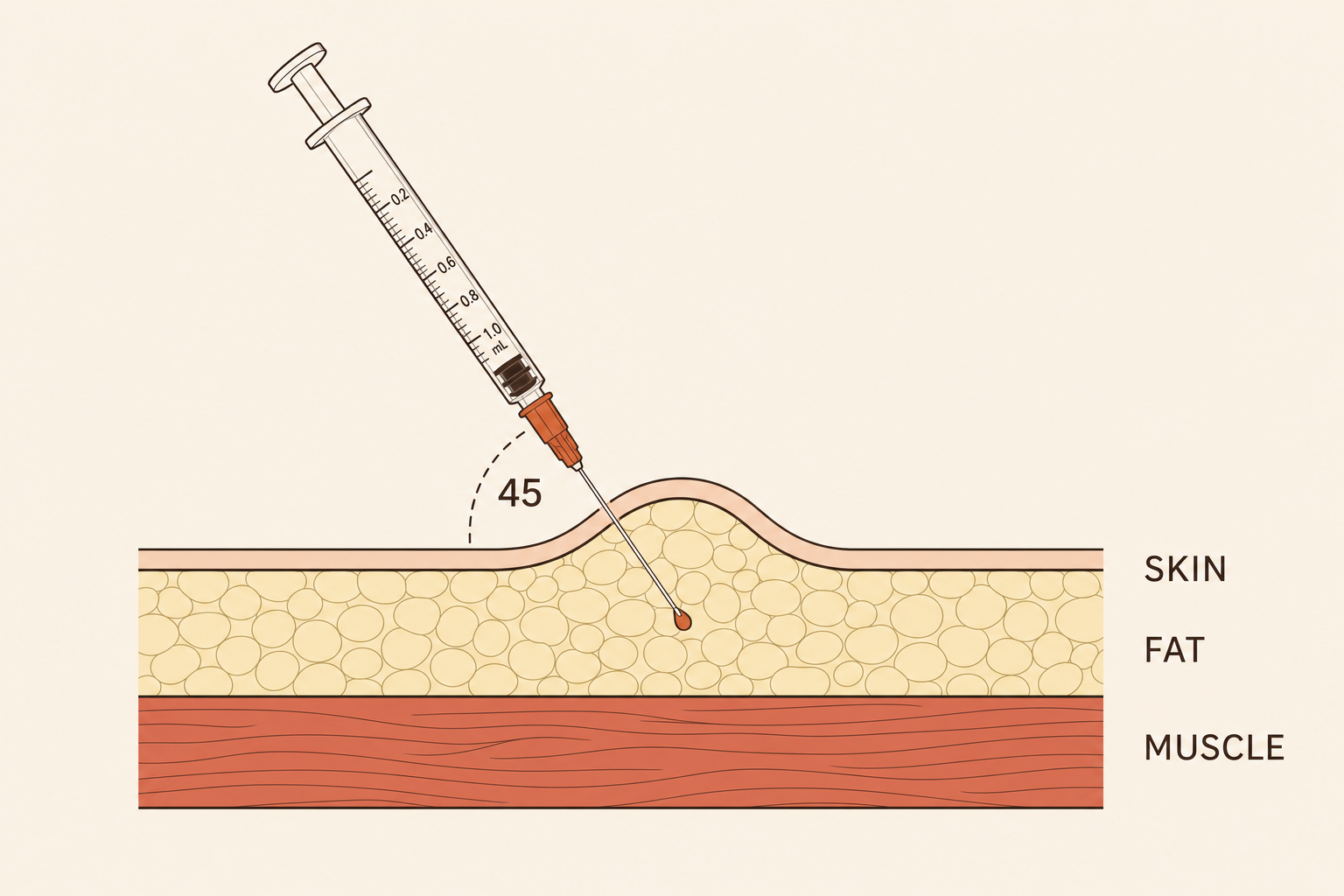
Cross-section illustration of a needle entering the subcutaneous fat layer at 45 degrees

The needle sits in the fat layer, above the muscle. A short needle makes this almost foolproof.

Step 4 · Inject

Pinch, insert, push.

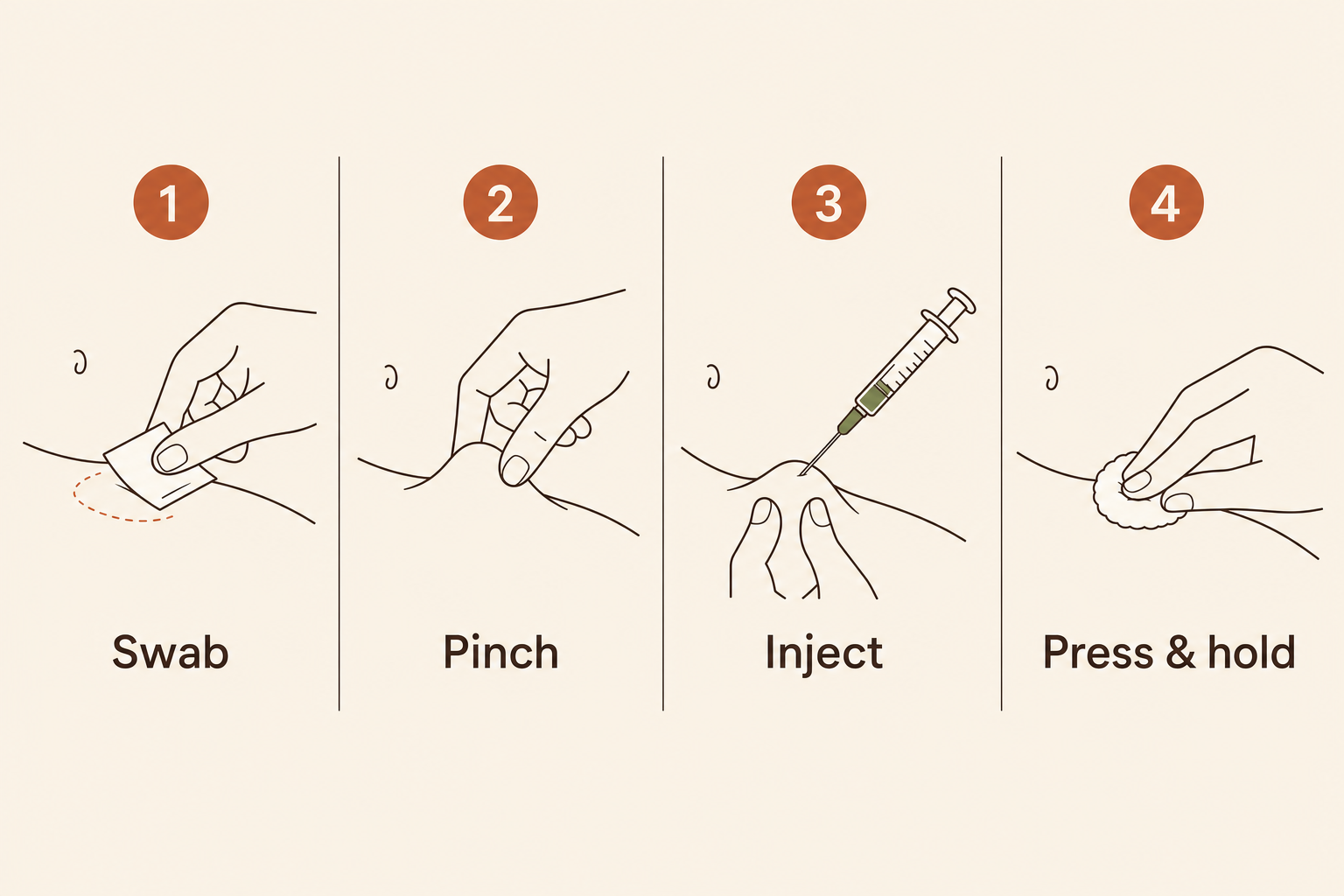
Swab the spot and let it dry. Pinch up a fold of fat, insert the needle at a 45 to 90 degree angle in one smooth motion, and push the plunger slowly and steadily.

  1. Clean the site with a fresh alcohol pad, let it dry
  2. Pinch a fold of skin and fat
  3. Insert at 45–90° in one quick, smooth move
  4. Push the plunger slowly, then withdraw and apply light pressure
Step 5 · Aftercare

Clean up safely.

Never recap a used needle, and never put it in household trash. Drop the whole syringe straight into your sharps container. If you see a small bead of blood, apply gentle pressure with a clean pad, a little bruising now and then is normal.

Put your peptide vial back in the fridge. A reconstituted vial keeps for several weeks refrigerated; don't freeze it once it's mixed.

Common questions.

Does a subq injection hurt?

Usually very little. The needles are tiny (29–31 gauge) and the fat layer has few pain receptors. Letting the alcohol dry fully before you inject removes most of the sting.

How fast should I push the plunger?

Slowly and steadily, over a few seconds. Pushing too fast can sting and is more likely to leave a small welt.

What if I see a little blood?

It's common and harmless. Apply light pressure with a clean pad. Occasional small bruises happen when you nick a tiny surface vessel, rotating sites keeps it rare.

Do I need to aspirate?

For subcutaneous shots into fat, aspirating (pulling back to check for blood) is generally considered unnecessary. It matters more for intramuscular injections.

Just to be clear.

This site is for educational and informational purposes only and is not medical advice. Nothing here is intended to diagnose, treat, cure, or prevent any disease, and none of these statements have been evaluated by the FDA or any regulatory authority. Talk to a licensed healthcare provider before starting anything.

Peptides and other compounds referenced on this site are sold by third-party vendors strictly as research chemicals for laboratory and research use only. They are not drugs, dietary supplements, cosmetics, or products intended to diagnose, treat, cure, or be consumed by humans or animals, and nothing here is an offer to sell or any encouragement to use them in any such way. You must be at least 18 years old, and of legal age in your jurisdiction, to use this site. Clearly Peptides does not manufacture, sell, supply, or ship any peptides or compounds.

Lab data, grades, and prices are aggregated from publicly available third-party sources, primarily the Janoshik public database and finnrick, plus community-submitted reports. We don't run labs or test anything ourselves. We present this public information, credit each source, and link back to the original report so you can read it yourself. Listing a vendor or compound is not an endorsement.

Clearly Peptides participates in affiliate programs and may earn a commission when you buy through a link or code on this site, at no extra cost to you.

Clearly Peptides is not liable for any actions you take based on the information provided here. Your use of this site is subject to our Terms of Use.