The short version.
If you read nothing else, read this. The whole guide in a handful of bullets.
- What it is: Survodutide (BI 456906) is an investigational dual agonist that activates both the GLP-1 and the glucagon receptor in a single peptide.
- What people run it for: appetite control and fat loss, with the glucagon arm adding a metabolic-rate and liver-fat angle that pure GLP-1 drugs do not have.
- Typical dose: once weekly, starting around 0.6 mg and titrated up slowly toward roughly 4.8 mg over three to four months.
- Routes: subcutaneous injection is the only practical route. It is not an oral peptide.
- Cycle: a slow titration to the target dose, then a maintenance phase, run under the same once-weekly rhythm.
- Honest caveat: the human trial data is real and substantial, but Survodutide is still investigational and not approved anywhere. It is sold for research use only, and this is not medical advice.
Quick reference.
| Typical dose | 0.6 mg weekly to start, titrated toward ~4.8 mg |
|---|---|
| Routes | Subcutaneous injection (only practical route) |
| Frequency | Once a week |
| Cycle length | ~3 to 4 month titration, then maintenance |
| Best for | Appetite control, fat loss, liver-fat and metabolic-rate angle |
What is Survodutide?
Survodutide is a peptide, which simply means a small chain of amino acids, the same building blocks that make up the proteins in your body. It was developed by Boehringer Ingelheim with Zealand Pharma, and in research it is often called by its code name, BI 456906.
What makes it different is that a single molecule activates two receptors at once. The GLP-1 receptor is the same target as Semaglutide and the GLP-1 half of Tirzepatide, and it drives appetite control and blood-sugar regulation. The glucagon receptor is the second target, and activating it is meant to raise the body's energy expenditure and help the liver burn stored fat.
The version sold by vendors arrives as a freeze-dried white powder in a small sealed vial. It is not a steroid, not a stimulant, and not a hormone replacement. People reach for it for one theme above all: losing weight, with a metabolic and liver-fat angle that the pure GLP-1 drugs do not offer.
Worth saying plainly: Survodutide is investigational and not approved anywhere. The clinical trials behind it are real, but the vials vendors sell are not the clinical product and are sold strictly for research use only. We get into what that means further down.
How it works in the body.
You do not need a biology degree to follow this. Here is the simple picture, then a little more for the curious.
The core idea is that Survodutide does two jobs at once. It turns down appetite the way a GLP-1 drug does, and it adds a glucagon signal that nudges the body to burn more energy. It does this through a few overlapping mechanisms that show up repeatedly in the research.
- GLP-1 appetite control. The GLP-1 arm acts on the gut-brain circuit to reduce hunger, slow gastric emptying, and help regulate blood sugar. This is the same mechanism behind Semaglutide, and it is the main driver of how full you feel.
- Glucagon and energy burn. The glucagon arm is studied for raising the body's resting energy expenditure and for pushing the liver to break down stored fat. This is the part that pure GLP-1 drugs do not have.
- A deliberate bias. The molecule is tuned to fully activate GLP-1 but only partially activate glucagon, the idea being to add the metabolic boost without the blood-sugar problems that strong glucagon signaling can cause.
How to take it: routes of administration.
Survodutide is an injectable peptide. Unlike some peptides, it is not a meaningful oral option, so the real choice is just where you inject. Here is the honest comparison.
| Route | Typical dose | Absorption | Best for | Difficulty |
|---|---|---|---|---|
| Subcutaneous | 0.6–4.8 mg | Reliable, systemic | Standard route | Tiny needle, easy to learn |
| Intramuscular | Not standard | Higher, faster | Not used in trials | Unnecessary, more invasive |
| Oral | Not practical | Very low | Not recommended | Poorly absorbed |
Subcutaneous injection
The standard route, and the one used in every clinical trial. A tiny insulin needle goes into the fat just under the skin, not into muscle. It is a once-weekly shot, and it is far less intimidating than it sounds.
Intramuscular
There is no reason to inject Survodutide into muscle. The trials all used subcutaneous dosing, the weekly schedule depends on a slow, steady release from the fat, and an intramuscular shot would only add discomfort with no benefit.
Oral
Survodutide is a peptide that does not survive digestion, so there is no practical oral version. Capsule products are not worth chasing. Stick to the subcutaneous injection.
Where to inject.
If you go this route, these are the sites people use. Rotate so no single area gets sore.
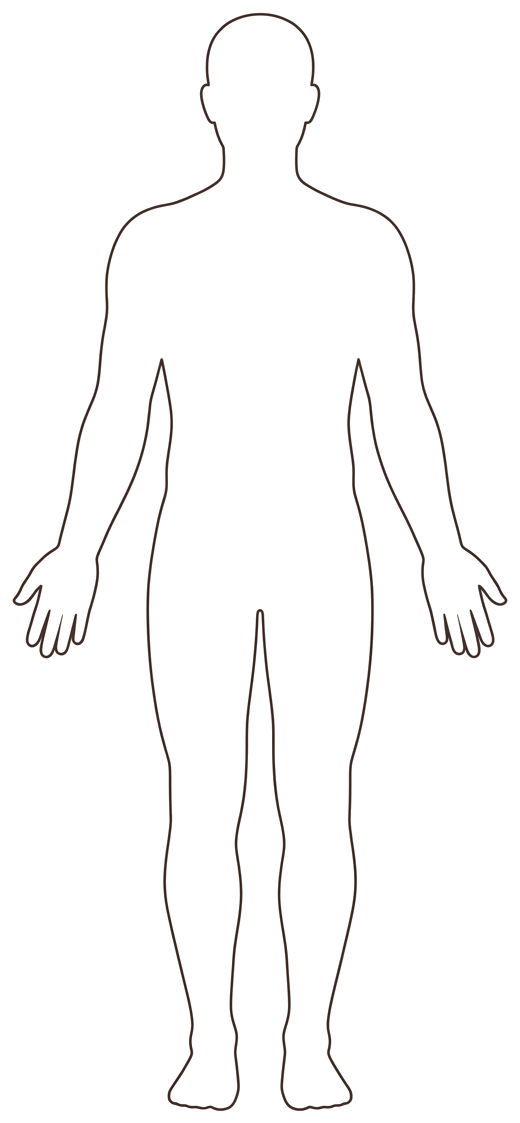
The easiest spots are the belly (about 2 inches either side of the navel), the love handles, the front of the thigh, and the back of the upper arms. Rotate every injection.
So which should a beginner pick? There is really only one answer: subcutaneous. It is the route used in every trial, the needle is tiny, and a simple weekly shot into the belly is all the protocol calls for. The other routes are listed only to be complete.
Reconstitution: mixing it.
Survodutide arrives as a dry powder, so before you can inject it you reconstitute it, which just means adding liquid to turn the powder into something you can draw into a syringe. It sounds technical but takes about a minute.
Once it is mixed, the only real question is how many units to draw. That depends on your vial size, your water amount, and your target dose, and it is easy to get wrong by hand, especially because Survodutide doses start very small.
- Use bacteriostatic water, often called BAC water. The small amount of preservative keeps the mixed vial usable for weeks.
- Add the water slowly, down the inside wall of the vial. A common mix is a 10 mg vial plus 2 mL of BAC water, which gives a concentration of 5 mg/mL.
- Swirl, do not shake. Gently roll the vial until the powder dissolves. Shaking can damage the peptide.
- Store it in the fridge once mixed, and keep it out of direct light.
Open the dosage calculator to turn your vial and dose into an exact number of units. As a worked example: a 10 mg vial mixed with 2 mL of BAC water gives 5 mg/mL, so a 0.6 mg starting dose is 0.12 mL, which is 12 units on a U-100 insulin syringe, and that vial holds about 16 starting doses.
Dosing by goal.
There is no single official dose for Survodutide, because it is not an approved medicine. What follows is the range used in the clinical trials, organized by phase. The defining feature of Survodutide dosing is the slow titration that keeps nausea manageable.
Titration phase
Trials started at about 0.6 mg once a week and stepped up by roughly 0.6 mg every two weeks as tolerated. The point of the slow climb is to let the gut and brain adapt to the GLP-1 effect, which is what causes nausea early on.
Target and maintenance
The titration aims for a target dose near 4.8 mg once a week, reached over roughly three to four months. From there people hold the dose. Some trials went as high as 6.0 mg in specific protocols.
Why the ramp matters
Jumping to a high dose causes severe nausea and vomiting. The whole structure of Survodutide dosing is built around climbing slowly. Patience during titration is the single most important part of running it well.
Start low and increase by about 0.6 mg every two weeks as tolerated. This slow climb is what keeps GI side effects manageable.
Hold near the target dose once you reach it. Some protocols go to 6.0 mg. Do not rush to get here.
Cycling and timing.
A cycle here is less about on-and-off and more about the climb. The standard pattern is a slow titration up to the target dose over three to four months, then a maintenance phase at the target dose. People run it continuously the way the trials did, rather than in short bursts.
Why titrate so slowly? Almost entirely for tolerability. The GLP-1 effect causes nausea, and that nausea is worst when the dose jumps. A gradual climb gives the body time to adapt while still reaching an effective dose within a few months.
- Hold each step for about two weeks before increasing, so your gut can adapt.
- Do not skip ahead to a higher dose to speed things up. That is the fastest way to severe nausea.
- If you stop, taper rather than quitting cold, and treat any return of appetite or weight as a conversation for a licensed provider.
Stacking Survodutide.
Survodutide is usually run on its own while titrating, but a few pairings come up when people want to cover the gaps a GLP-1/glucagon agonist leaves.
Weight loss combo
Pairing Survodutide with Cagrilintide, an amylin analog, adds a separate satiety signal on top of the GLP-1 and glucagon effects. This dual-mechanism approach is exactly what the next-generation weight research is exploring.
View stack →Fat loss with muscle support
The idea is to lose fat on Survodutide while a GH-releasing pair supports lean mass and recovery during the calorie deficit. People run this to avoid losing muscle along with the fat.
View stack →See full recipes, dosing, and how people run them on the stacks page.
Side effects and safety.
In the trials and the reports we see, Survodutide's side effects are dominated by the GLP-1 effect, and they are worst during dose escalation. The ones people mention most often are:
- Nausea, the most common by far, reported by more than half of trial participants, mostly during titration.
- Vomiting, reported by roughly a quarter of participants, again concentrated in the climb to higher doses.
- Abdominal pain, bloating, or constipation, usually mild to moderate and dose-dependent.
- Headache, dizziness, or injection-site irritation, redness or a small bump, which is why rotating sites matters.
Who should be cautious.
Some people have clear reasons to be extra careful, or to avoid Survodutide entirely until they have spoken with a licensed provider.
- Pregnant or breastfeeding. There is no safety data here, so this is a hard avoid.
- A personal or family history of medullary thyroid cancer or MEN 2. This is the standard caution for the entire GLP-1 class and applies here too.
- History of pancreatitis, gallbladder disease, or significant heart-rhythm issues. The GLP-1 and glucagon effects make these a real conversation for a provider first.
- Anyone on other medications, especially diabetes drugs, since Survodutide affects blood sugar. If you manage a chronic condition, talk to your provider first.
And the universal one: whoever you are, talk to a licensed healthcare provider before starting Survodutide. This guide is educational, not a substitute for personalized medical advice.
Where to buy it safely.
This is where a lot of beginners get burned, because peptide quality varies wildly between vendors and the cheapest vial is not always the real deal. Our honest take: do not shop on price alone, shop on price plus independent lab data.
- Compare vendors side by side. Price ranges are wide, and the difference between the lowest and highest listing can be large for the exact same compound.
- Look for recent third-party lab tests. The gold standard the community looks for is a recent Janoshik certificate of analysis showing purity for the batch you are actually buying.
- Favor recent COAs. An old lab result on a different batch tells you little. The fresher the test, the more it means.
- Be skeptical of suspiciously cheap listings with no testing behind them.
That is exactly the comparison we put together. On our Survodutide product page you can compare vendor prices, see which batches have public lab data, and view the grades we assign from that data. From there you can head to the buy page to line up your options.
Questions, answered straight.
Is Survodutide legal?
Survodutide is an investigational drug. It is not approved for human use anywhere yet, and the vendors we compare offer it strictly for research use only. It is not currently named on WADA's prohibited list, but anti-doping bodies watch this class closely, so competing athletes should check current rules. Rules vary by country, so check what applies where you are.
How is it different from Retatrutide?
Retatrutide is a triple agonist that hits GLP-1, GIP, and glucagon, and in trials it produced the largest weight loss of the group. Survodutide is a dual agonist that hits GLP-1 and glucagon only. Survodutide's standout angle is liver-fat reduction, which is why it is also studied for liver disease (MASH).
How is it different from Semaglutide or Tirzepatide?
Semaglutide hits one receptor (GLP-1) and Tirzepatide hits two (GLP-1 and GIP). Survodutide hits GLP-1 plus glucagon. The glucagon arm is meant to raise energy expenditure and reduce liver fat, a different approach from the GIP arm in Tirzepatide.
Why does it cause so much nausea?
The nausea comes from the GLP-1 effect, which slows gastric emptying. It is worst when the dose jumps, which is exactly why the protocol titrates so slowly. Most people find the nausea fades at each step as the body adapts, then returns briefly at the next increase.
How do I figure out the dose in units?
Use our calculator. Enter your vial size, how much bacteriostatic water you added, and your target dose, and it tells you exactly how many units to draw on a U-100 syringe. Because Survodutide doses start under 1 mg, the dosage calculator is worth using every time.