The short version.
If you read nothing else, read this. The whole guide in a handful of bullets.
- What it is: Tirzepatide is a dual GIP and GLP-1 receptor agonist, the same molecule sold as the prescription drugs Mounjaro and Zepbound. It is a 39 amino acid synthetic peptide.
- What people run it for: appetite control and weight loss, with steadier blood sugar as a side benefit. It is the headline weight-loss peptide of the moment.
- Typical dose: start at 2.5 mg once a week, then step up by 2.5 mg every four weeks as tolerated, up to a maximum of 15 mg weekly.
- Routes: subcutaneous injection, once a week. It is not an oral peptide in this form.
- Cycle: run continuously while losing weight, with a slow upward titration; appetite tends to return if you stop abruptly.
- Honest caveat: the molecule is backed by large human trials, but research-grade vials are not the approved drug, are not quality controlled the same way, and are sold for research use only. This is not medical advice.
Quick reference.
| Typical dose | 2.5 mg weekly start, titrate to 5–15 mg |
|---|---|
| Routes | Subcutaneous injection, once weekly |
| Frequency | Once a week, same day each week |
| Cycle length | Continuous while losing weight, slow titration |
| Best for | Appetite control, weight loss, blood sugar |
What is Tirzepatide?
Tirzepatide is a peptide, which simply means a chain of amino acids, the same building blocks that make up the proteins in your body. This one is 39 amino acids long and was engineered to act like two of your own gut hormones at once, GIP and GLP-1.
Those two hormones are released after you eat. They tell your brain you are full, prompt your pancreas to release insulin when blood sugar rises, and slow how fast your stomach empties. Tirzepatide mimics both, which is why people feel satisfied on much smaller meals.
The molecule is the active ingredient in two approved prescription drugs, Mounjaro for type 2 diabetes and Zepbound for weight loss. The research-grade version sold by peptide vendors arrives as a freeze-dried white powder in a small sealed vial. It is not a steroid, not a stimulant, and not a hormone you are deficient in.
Worth saying plainly: the tirzepatide molecule is unusually well studied, with large human trials behind it. But the research vials sold here are not the approved Mounjaro or Zepbound product, are not held to the same manufacturing and purity standards, and are sold strictly for research use only. We get into what that means further down.
How it works in the body.
You do not need a biology degree to follow this. Here is the simple picture, then a little more for the curious.
The core idea is that tirzepatide imitates two gut hormones your body already makes after meals, and hitting both pathways at once is what makes it more powerful than older single-hormone drugs.
- Two appetite switches, not one. Older drugs like semaglutide hit only the GLP-1 receptor. Tirzepatide hits GLP-1 and GIP together, and that dual action is linked to stronger appetite suppression and more weight loss in head-to-head trials.
- Slower stomach emptying. It slows how fast food leaves your stomach, so you feel full sooner and stay full longer. This is also the main reason for the early nausea.
- Steadier blood sugar. It prompts insulin release only when blood sugar is high (glucose-dependent) and lowers glucagon, so it smooths out blood sugar without the crash risk of some other drugs.
How to take it: routes of administration.
Tirzepatide is an injectable peptide. In this research-vial form it is not a meaningful oral option, so the real choice is just where on the body you inject. Here is the honest comparison.
| Route | Typical dose | Absorption | Best for | Difficulty |
|---|---|---|---|---|
| Subcutaneous | 2.5–15 mg | Reliable, systemic | Weekly weight-loss dosing | Tiny needle, easy to learn |
| Intramuscular | Not standard | Faster, no benefit | Not recommended | More invasive, no upside |
| Oral | Not practical | Very low | Not recommended | Destroyed by digestion |
Subcutaneous injection
The standard route, and the only one that makes sense. A tiny insulin needle goes into the fat just under the skin, not into muscle. This is exactly how the approved pens deliver it, and it is far less intimidating than it sounds. Once a week is all it takes.
Intramuscular
There is no reason to inject tirzepatide into muscle. It is designed for slow, steady subcutaneous absorption over a week, and a deeper intramuscular shot just adds discomfort for no benefit. Skip it.
Oral
Injectable tirzepatide is not an oral peptide. It is a large molecule that does not survive digestion, so swallowing the reconstituted liquid does nothing useful. If you specifically want a pill, look at an oral GLP-1 like orforglipron instead.
Where to inject.
If you go this route, these are the sites people use. Rotate so no single area gets sore.
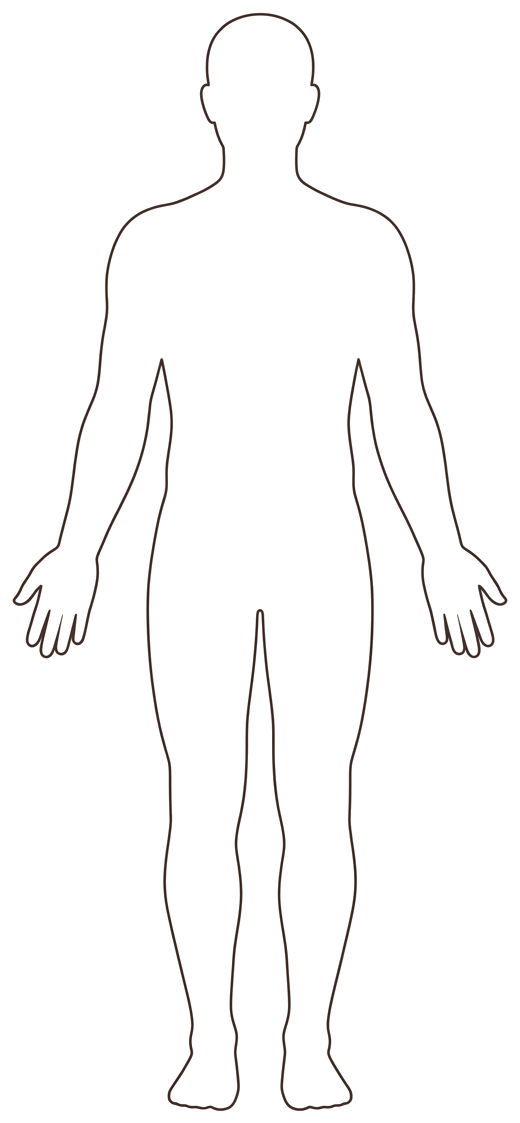
The easiest spots are the belly (about 2 inches either side of the navel), the love handles, the front of the thigh, and the back of the upper arms. Rotate every injection.
So which should a beginner pick? Subcutaneous, full stop. It is the only route that works, it matches how the approved pens deliver the drug, and the needle is tiny. Pick a day of the week, inject into the belly, thigh, or arm, and rotate the spot each time.
Reconstitution: mixing it.
Tirzepatide arrives as a dry powder, so before you can inject it you reconstitute it, which just means adding liquid to turn the powder into something you can draw into a syringe. It sounds technical but takes about a minute.
Once it is mixed, the only real question is how many units to draw. That depends on your vial size, your water amount, and your target dose, and it is easy to get wrong by hand, which matters a lot at these milligram doses.
- Use bacteriostatic water, often called BAC water. The small amount of preservative keeps the mixed vial usable for weeks.
- Add the water slowly, down the inside wall of the vial. A clean mix is a 30 mg vial plus 3 mL of BAC water, which gives a concentration of 10 mg/mL and makes the unit math tidy.
- Swirl, do not shake. Gently roll the vial until the powder dissolves. Shaking can damage the peptide and cause foaming.
- Store it in the fridge once mixed, out of direct light, and use it within about 28 days.
Open the dosage calculator to turn your vial and dose into an exact number of units. As a worked example: a 30 mg vial mixed with 3 mL of BAC water gives 10 mg/mL, so a 2.5 mg dose is 0.25 mL, which is 25 units on a U-100 insulin syringe, and that vial holds about 12 starting doses.
Dosing by goal.
There is a well-defined dosing schedule for tirzepatide, because the approved drugs use one. The defining feature is slow titration: you start low and step up every four weeks, which keeps the side effects manageable.
Starting dose
Everyone starts at 2.5 mg once a week, held for the first four weeks. This dose is for getting your body used to the drug, not for serious weight loss. Resist the urge to start higher.
Titration
After the first four weeks, the dose steps up by 2.5 mg, so 5 mg, then 7.5 mg, then 10 mg, with at least four weeks at each level before moving up. Many people find their results and comfort level at 5 or 10 mg and stop there.
Maximum dose
The ceiling is 15 mg once a week. There is no benefit to going higher, and most people never need it. If side effects flare after a step up, holding at the previous dose for longer is completely reasonable.
The on-ramp dose. Not meant for big weight loss, just for letting your stomach adjust before climbing.
Step up by 2.5 mg every four weeks as tolerated. Most people settle somewhere in the 5 to 10 mg range; 15 mg is the ceiling.
Cycling and timing.
Tirzepatide is not really cycled the way recovery peptides are. People run it continuously while they are losing weight, slowly titrating the dose upward, then holding at a maintenance level once they hit their goal.
The honest catch is what happens when you stop. Appetite tends to come back, and a chunk of the lost weight often returns unless eating habits have genuinely changed. This is true of the approved drugs too, so plan for the long game rather than a quick fix.
- Titrate up slowly, four weeks per step, never more than 2.5 mg at a time.
- Hold at the lowest effective dose that keeps appetite in check, rather than always chasing the maximum.
- If you stop, taper rather than quit cold, and expect appetite to rebound. Whether and how to come off is a conversation for a licensed provider.
Stacking Tirzepatide.
Tirzepatide is potent enough that most people run it on its own. When people do stack, it is usually to push appetite suppression further or to ease the side effects.
Triple-pathway appetite
The most talked-about pairing. Adding cagrilintide, an amylin analogue, layers a third appetite pathway on top of the GIP and GLP-1 base. The aim is deeper appetite suppression. Be honest with yourself that this exact combo has no completed human trial behind it.
View stack →Fat loss with gut support
Some people add BPC-157 hoping to settle the nausea and gut upset that come with GLP-1 dosing. The rationale is plausible but the evidence is anecdotal, not clinical, so treat it as experimental rather than proven.
View stack →See full recipes, dosing, and how people run them on the stacks page.
Side effects and safety.
In the trials and the reports we see, tirzepatide's side effects are overwhelmingly gastrointestinal, usually mild to moderate, and worst right after a dose increase. The ones people mention most often are:
- Nausea, by far the most common, especially in the first weeks and after each step up in dose.
- Diarrhea, constipation, or vomiting, the other gut effects that tend to ease as your body adjusts.
- Reduced appetite and early fullness, which is the intended effect but can tip into not eating enough.
- Injection-site irritation, a little redness or a small bump, which is why rotating sites matters.
Who should be cautious.
Some people have clear reasons to be extra careful, or to avoid tirzepatide entirely until they have spoken with a licensed provider.
- A personal or family history of medullary thyroid cancer, or MEN 2. The approved drugs carry a boxed warning here based on rodent thyroid tumors. This is a hard avoid without a doctor's sign-off.
- A history of pancreatitis or gallbladder disease. Both have been reported with this drug class, so caution is widely advised.
- Pregnant or breastfeeding. There is no safety data here, and the drug is not advised, so this is a hard avoid.
- Anyone on diabetes medication or other prescriptions. Combining with insulin or sulfonylureas can drop blood sugar dangerously. Talk to your provider first.
And the universal one: whoever you are, talk to a licensed healthcare provider before starting tirzepatide. This guide is educational, not a substitute for personalized medical advice.
Where to buy it safely.
This is where a lot of beginners get burned, because peptide quality varies wildly between vendors and the cheapest vial is not always the real deal. Our honest take: do not shop on price alone, shop on price plus independent lab data.
- Compare vendors side by side. Price ranges are wide, and the difference between the lowest and highest listing can be large for the exact same compound.
- Look for recent third-party lab tests. The gold standard the community looks for is a recent Janoshik certificate of analysis showing purity for the batch you are actually buying.
- Favor recent COAs. An old lab result on a different batch tells you little. The fresher the test, the more it means, and at tirzepatide's milligram doses, dose accuracy matters.
- Be skeptical of suspiciously cheap listings with no testing behind them.
That is exactly the comparison we put together. On our tirzepatide product page you can compare vendor prices, see which batches have public lab data, and view the grades we assign from that data. From there you can head to the buy page to line up your options.
Questions, answered straight.
Is Tirzepatide legal?
The molecule is FDA-approved as the prescription drugs Mounjaro and Zepbound. The research-grade vials we compare are a different thing: they are sold strictly for research use only, not as the approved drug, and not for human use. WADA began monitoring tirzepatide in 2026, so competing athletes should check their rules. Laws vary by country, so check what applies where you are.
How is it different from semaglutide?
Semaglutide (Ozempic, Wegovy) hits only the GLP-1 receptor. Tirzepatide hits GLP-1 and GIP together. In head-to-head trials the dual action produced more weight loss on average, though it also means a slightly different side-effect profile. People often compare the two directly when deciding.
How long until it works?
Appetite usually drops within the first couple of weeks, but meaningful weight loss builds over months as you titrate up. It is a slow, steady process by design, not an overnight switch.
Why does it cause nausea, and what helps?
It slows how fast your stomach empties, which is great for fullness but rough on the gut, especially right after a dose increase. The fixes that help most are titrating slowly, eating smaller and lower-fat meals, and not jumping the dose. For most people the nausea fades as the body adjusts.
Does it need refrigeration?
Keep the sealed, freeze-dried vial in the fridge and out of light. Once you mix it with bacteriostatic water, store it refrigerated and use it within about 28 days. Do not freeze a reconstituted vial.
How do I figure out the dose in units?
Use our calculator. Enter your vial size, how much bacteriostatic water you added, and your target dose, and it tells you exactly how many units to draw on a U-100 syringe. The dosage calculator handles the math for you.