Gonadorelin
A synthetic copy of gonadotropin-releasing hormone (GnRH), the hypothalamic signal that starts your whole sex-hormone cascade. People run it to keep their own testosterone and fertility online, most often as an adjunct alongside testosterone therapy where the goal is keeping the testes working.
Where to buy Gonadorelin, cheapest first.
Prices from 2 vendors across the market. We link straight to each vendor’s product page and grade vendors on public lab data, so you’re not just chasing the lowest number.
What Gonadorelin actually does.
The simple version first, then a little more for the curious. No biochem degree required.
It pokes the pituitary the same way your brain does, telling it to release LH and FSH, the hormones that drive your testes to make testosterone and sperm, so the natural signal stays switched on.
How it works
Gonadorelin is identical to natural GnRH, a 10-amino-acid peptide from the hypothalamus. It binds receptors on the pituitary and prompts a burst of luteinizing hormone (LH) and follicle-stimulating hormone (FSH), the two signals that drive the testes or ovaries.
Why timing is everything
Your brain releases GnRH in short pulses, not a steady stream. Pulsed dosing keeps the pituitary responsive. Constant, unbroken exposure does the opposite and desensitizes the receptors, which is exactly how GnRH-agonist cancer drugs shut hormones down. The rhythm matters as much as the dose.
What people use it for
On testosterone therapy, exogenous testosterone tells the brain to stop signaling, so the testes shrink and fertility drops. Gonadorelin is run to keep that LH and FSH signal alive, so the testes stay active. It is the upstream alternative to hCG.
Honest caveat: gonadorelin is FDA-approved only for narrow diagnostic and fertility uses, not as a TRT add-on, and its extremely short half-life means real-world bro protocols may not reproduce the clean pulses used in clinical pumps. Most of the TRT-adjunct evidence is clinical experience and analogy to hCG, not large trials. It is sold strictly for research use only. None of this is medical advice, talk to a licensed provider before starting anything.
How to take it.
Gonadorelin is an injection, given subcutaneously into fat with a tiny insulin needle. Because it clears the body in minutes, people dose small amounts frequently, often nightly, rather than in big weekly shots. Clinical pulsatile protocols use an infusion pump, but the community runs simple subq shots. The routine is below; for cycling and timing, see the full guide.
Reconstitute the vial
Add bacteriostatic water down the side of the vial (a 2mg vial + 2mL = 1mg/mL, which is 1000 mcg/mL). Let it dissolve. Swirl gently, don't shake.
Draw your dose
On a U-100 insulin syringe, pull to your unit mark. 100 mcg at 1mg/mL is 10 units (0.1mL). Use the calculator if you're unsure, the doses here are small.
Pinch and inject
Swab with alcohol, pinch a bit of fat, insert at 45–90°, push slowly. Subcutaneous into the belly is simplest. People often time it for the evening to loosely mimic the night-time pulse.
Rotate your sites
Move to a different spot each time so no area gets sore or lumpy. Store the vial in the fridge between doses and use it within about four weeks.
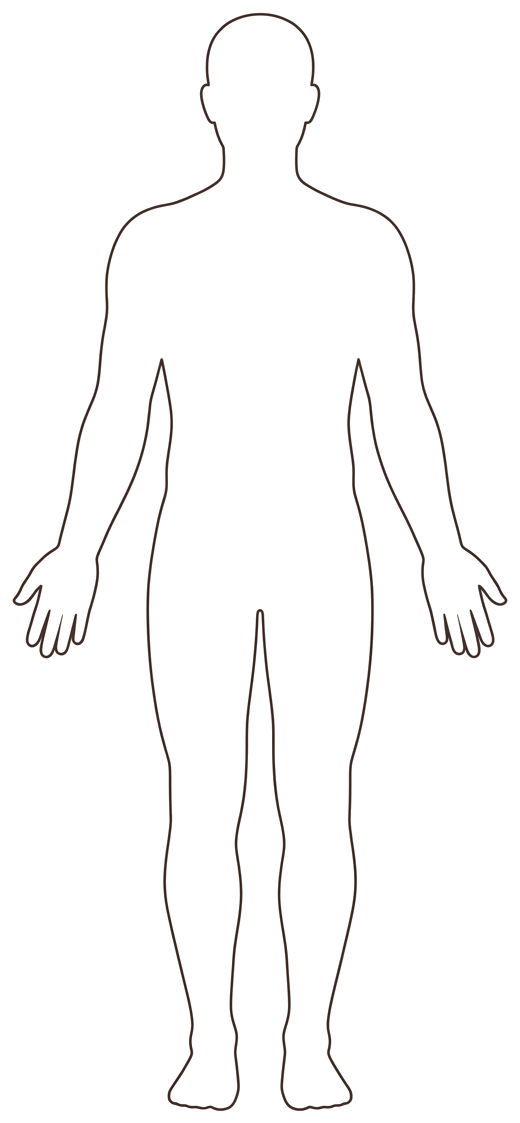
The easiest spots are the belly (about 2 inches either side of the navel), the love handles, the front of the thigh, and the back of the upper arms. Rotate every injection.
Don't do the math, let the calculator do it.
This is Gonadorelin's typical setup, already worked out. Change any value and the draw updates instantly.
Typical Gonadorelin dose: in the TRT-adjunct world, roughly 100 to 200 mcg subcutaneously, often once nightly or split across the day. Clinical pulsatile fertility protocols use far smaller pulses, about 5 to 20 mcg every 90 to 120 minutes by pump. It is run in cycles or alongside testosterone, not as a standalone forever-drug.
How to cycle Gonadorelin.
How long people run Gonadorelin, when to take a break, and the honest reasoning behind it.
Run in cycles, not as a standalone forever-drug.
A cycle just means a defined run of time on the peptide. Gonadorelin is a little different from most: people who run it as a TRT adjunct often keep it going for as long as they are on testosterone, because its job is to hold the natural signal open the whole time.
Others use it in shorter blocks, for example when trying to restart the axis or preserve fertility around a specific window. Either way, the cautious approach is to run it with a clear purpose and under guidance, not indefinitely on autopilot.
- Hold the rhythm rather than the calendar. Consistent, spaced dosing is the point, so keep the timing even.
- Match it to your testosterone protocol if that is why you are running it, so the support lines up with the suppression it is meant to offset.
- Reassess with a provider. Bloodwork on LH, FSH, and testosterone is how you actually know whether it is doing anything. If numbers do not move, that is a conversation for a licensed provider.
Want the full picture, on and off periods, the washout, stacking, and keeping your results? Read how peptide cycling works →
What's actually in the vial.
We haven't yet found a vendor publishing a lab certificate for Gonadorelin that we can link to directly. We don't post purity numbers we can't source. When a vendor publishes a real Gonadorelin COA, it'll show up here.
What people pair it with.
Gonadorelin is almost always run as a support peptide, not a headliner. These are the combinations people reach for around testosterone therapy and sexual health.
Fertility & testicular function
The main reason people run it. Exogenous testosterone shuts down the brain's signal; gonadorelin keeps LH and FSH alive so the testes stay active and fertility is better preserved. The upstream alternative to hCG.
View stack →Sexual health
Pairs the hormonal-axis support of gonadorelin with PT-141, which acts on the brain's melanocortin pathway for arousal. Different mechanisms, both aimed at sexual function rather than raw hormone levels.
View stack →Restarting the axis
Both work upstream on the hypothalamic-pituitary signal. People explore this pairing when the goal is nudging the natural axis back online rather than replacing hormones directly. Evidence here is thin, treat it as experimental.
View stack →In the same corner.
Other sexual-health and hormone-axis peptides people compare against Gonadorelin.
Questions, answered straight.
Is Gonadorelin legal?
Gonadorelin is FDA-approved for narrow diagnostic and fertility uses, but not for TRT support or performance. The vendors we compare offer it strictly for research use only. It is also on WADA's prohibited list (S2 peptide hormones), so competing athletes should steer clear. Rules vary by country, so check what applies where you are.
How is it different from hCG?
Both keep the testes working during testosterone therapy, but at different points in the chain. hCG mimics LH and acts directly on the testes; gonadorelin works one step earlier, prompting your own pituitary to release LH and FSH. Gonadorelin clears in minutes, so it is usually dosed more often, frequently nightly. They are not interchangeable.
Why does the dosing schedule matter so much?
Your brain releases GnRH in pulses, and the pituitary stays responsive to that rhythm. Short, spaced doses keep the signal working. Constant, unbroken exposure desensitizes the receptors and actually suppresses hormones, which is how GnRH-agonist cancer drugs are designed to work. The pattern matters as much as the number.
How do I store it?
Keep the sealed, freeze-dried vial in the fridge and out of direct light. Once you mix it with bacteriostatic water, store it refrigerated and use it within about four weeks. Don't freeze a reconstituted vial.
What does research use only actually mean?
It means the product is sold for laboratory and research purposes, not as a supplement or medicine for people. It hasn't been reviewed or approved for these uses by the FDA. We aggregate prices and public lab data so you can see the landscape; what you do with that is between you and a licensed provider.