KPV
A tiny three-amino-acid fragment of the body's own alpha-MSH hormone. People run it to calm inflammation, for gut and skin conditions, and as the anti-inflammatory layer in healing stacks alongside BPC-157.
Where to buy KPV, cheapest first.
Prices from 8 vendors across the market. We link straight to each vendor’s product page and grade vendors on public lab data, so you’re not just chasing the lowest number.
KPV
What KPV actually does.
The simple version first, then a little more for the curious. No biochem degree required.
It tells overactive immune cells to stand down, quieting the chemical signals that drive swelling, redness, and irritation, so inflamed tissue can settle and recover.
How it works
KPV is the tail end (positions 11 to 13) of alpha-MSH, the part that carries the anti-inflammatory punch without the pigment-darkening effect. It slips into cells and blocks NF-kB, a master switch that turns on inflammatory genes, so output of signals like TNF-alpha and IL-6 drops.
Where it acts
It is studied for the gut lining, the skin, and joints. Taken by mouth it is picked up directly by inflamed gut tissue; injected under the skin it works more systemically, which is why people use it for skin flares and body-wide inflammation.
What people notice
People reach for it during a flare, reporting calmer gut symptoms, less redness and irritation on the skin, and a general settling of inflammation. Effects are about damping a fire rather than building new tissue.
Honest caveat: nearly all of this comes from cell and animal studies, especially rodent colitis models. There are no completed human clinical trials of KPV, so the doses and effects above are extrapolated from preclinical work and community reports, not proven in people. It is not an approved medicine and is sold strictly for research use only. None of this is medical advice, talk to a licensed provider before starting anything.
How to take it.
KPV is most often given as a subcutaneous injection into fat with a tiny insulin needle, which is the route people use for skin and body-wide inflammation. For gut-specific issues some people take it orally instead, since inflamed gut tissue absorbs it directly. The subcutaneous routine is below; for the oral option and cycling, see the full guide.
Reconstitute the vial
Add bacteriostatic water down the side of the vial (a 5mg vial + 2mL = 2.5mg/mL). Let it dissolve. Swirl gently, don't shake.
Draw your dose
On a U-100 insulin syringe, pull to your unit mark. 0.5mg (500mcg) at 2.5mg/mL is 20 units (0.2mL). Use the calculator if you're unsure.
Pinch and inject
Swab with alcohol, pinch a bit of fat, insert at 45–90°, push slowly. Subcutaneous into the belly is simplest and works well for systemic and skin effects.
Rotate your sites
Move to a different spot each time so no area gets sore or lumpy. Store the vial in the fridge between doses.
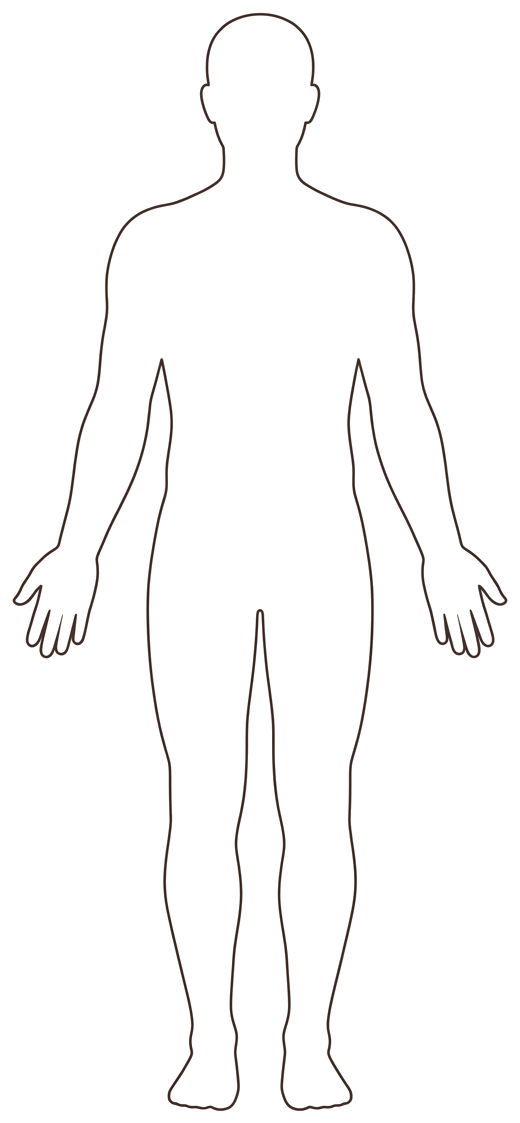
The easiest spots are the belly (about 2 inches either side of the navel), the love handles, the front of the thigh, and the back of the upper arms. Rotate every injection.
Don't do the math, let the calculator do it.
This is KPV's typical setup, already worked out. Change any value and the draw updates instantly.
Typical KPV dose: about 200 to 500 mcg once daily subcutaneously for skin or systemic inflammation, run in a focused block of roughly four to eight weeks rather than continuously. For gut issues people often take it orally instead, around 250 to 500 mcg once or twice a day on an empty stomach.
How to cycle KPV.
How long people run KPV, when to take a break, and the honest reasoning behind it.
Run in a focused block for a flare.
A cycle just means a defined run of time on the peptide, followed by a break. For KPV the common pattern is a focused block of roughly four to eight weeks during a flare or recovery push, then time off, rather than running it indefinitely.
Why not just run it forever? Mostly because the long-term human safety data does not exist yet. The cautious and widely followed approach is to run a focused block while you are settling inflammation, then stop.
- Hold a steady daily schedule through your block, dosing at roughly the same time each day.
- Match the route to the target, oral for the gut, subcutaneous for skin or whole-body inflammation.
- Take a real break after a cycle before considering another. If symptoms return, that is a conversation for a licensed provider.
Want the full picture, on and off periods, the washout, stacking, and keeping your results? Read how peptide cycling works →
What's actually in the vial.
For 3 of these vendors we link the per-batch certificate itself (a specific lab report, COA PDF, or certificate image), and the purity below is read straight off that certificate. The rest link to the vendor's general lab-results page. We don't run the labs ourselves and we don't show a purity number unless it's printed on a certificate we link, so you can open the document and check it against the batch yourself.
| Vendor | Purity (per COA) | Batch / report | Certificate |
|---|---|---|---|
| EZ Peptides | 99.181% | EZP-KPV1005152026-12 | Janoshik report ↗ |
| Onyx Biolabs | 99.957% | KPV0126-10-1 | View COA ↗ |
| Next Gen Peptides | see lab page | not shown | Lab results ↗ |
| Penguin Peptides | see lab page | not shown | Lab results ↗ |
| Amino Club | 99.2% | KPV0001 | COA (PDF) ↗ |
What people pair it with.
KPV is usually the anti-inflammatory layer in a stack rather than a solo act. These are the combinations the community reaches for when calming inflammation is the goal.
Recovery & repair
One blend that covers the whole recovery cascade, tissue and tendon repair, gut and skin support, and calmer inflammation. KPV is the anti-inflammatory piece of the all-in-one healing blend.
View stack →Gut & inflammation
The gut-and-flare pairing. KPV puts out the inflammatory fire while BPC-157 works on the gut lining and soft tissue, so people run them together during a flare.
View stack →Skin & calm
A skin-focused combo. KPV calms redness and irritation while GHK-Cu adds the copper-peptide angle for skin repair and collagen, popular for inflamed or reactive skin.
View stack →In the same corner.
Other healing and recovery peptides people compare against KPV.
Questions, answered straight.
Is KPV legal?
KPV isn't an approved drug, and it isn't sold for human use. The vendors we compare offer it strictly for research use only. KPV is not specifically named on WADA's prohibited list, but anti-inflammatory peptides sit in a gray area, so competing athletes should be cautious and check current rules. Laws vary by country, so check what applies where you are.
What does research use only actually mean?
It means the product is sold for laboratory and research purposes, not as a supplement or medicine for people. It hasn't been reviewed or approved for human use by the FDA. We aggregate prices and public lab data so you can see the landscape; what you do with that is between you and a licensed provider.
How do I store it?
Keep the sealed, freeze-dried vial in the fridge, and out of direct light. Once you mix it with bacteriostatic water, store it refrigerated and use it within a few weeks. Don't freeze a reconstituted vial.
Should I inject it or take it orally?
It depends on the target. For skin flares or body-wide inflammation, people inject it subcutaneously into the belly. For gut conditions, oral KPV is popular because inflamed gut tissue absorbs it directly. Some people use both. There's no official dose either way, so start low and use the calculator for the injectable.
How strong is the evidence?
Honestly, thin. KPV looks promising in cell and animal studies, especially rodent gut-inflammation models, but there are no completed human clinical trials. The doses people use are extrapolated from preclinical work and community reports, not proven in humans. Treat it as experimental and talk to a licensed provider.