ARA-290
An 11-amino-acid peptide derived from erythropoietin, engineered to drop the blood-building effect and keep only the tissue-protective signal. People run it for nerve pain, small-fiber neuropathy, and quieting inflammation, often alongside BPC-157.
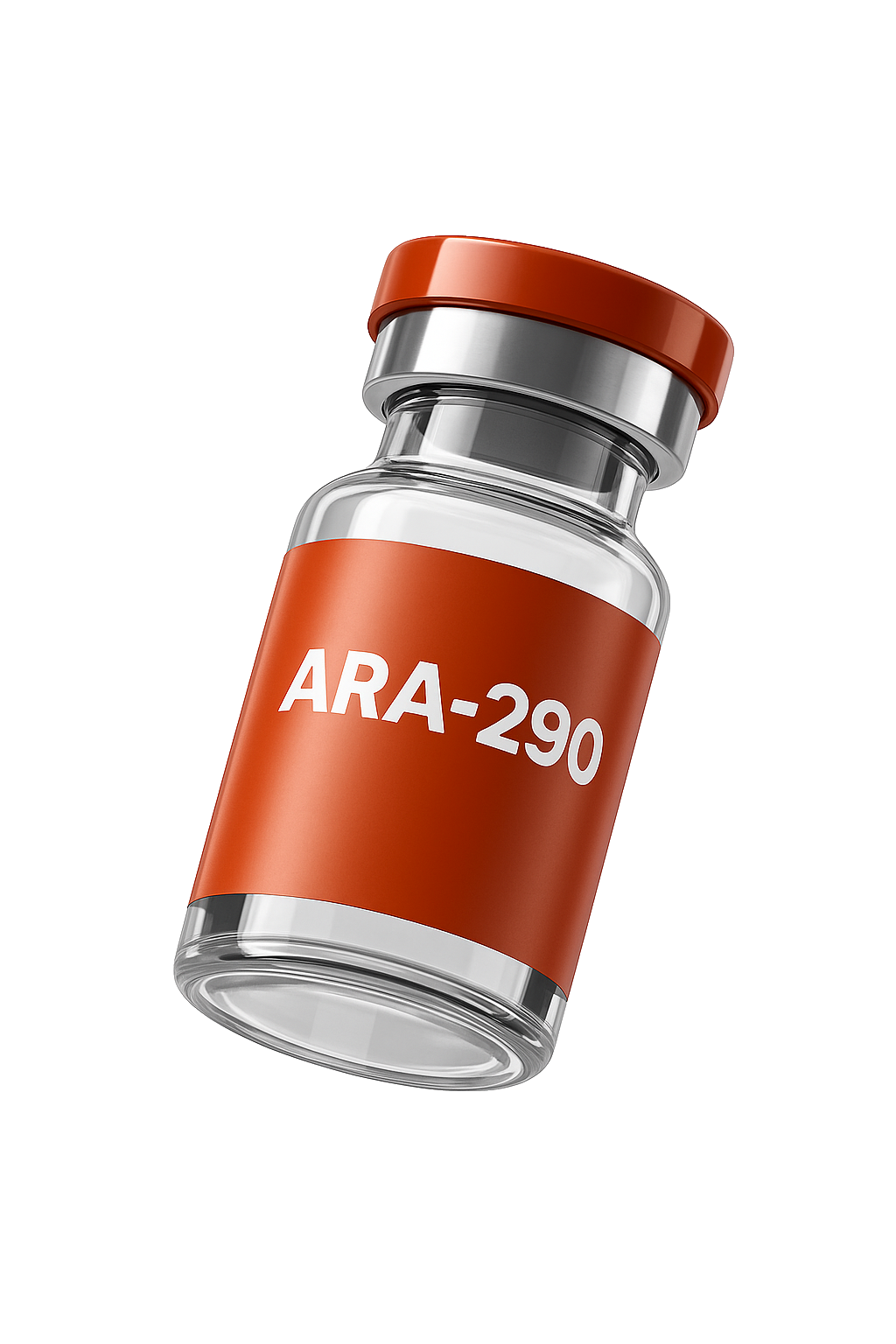
Where to buy ARA-290, cheapest first.
Prices from 5 vendors across the market. We link straight to each vendor’s product page and grade vendors on public lab data, so you’re not just chasing the lowest number.
ARA-290
What ARA-290 actually does.
The simple version first, then a little more for the curious. No biochem degree required.
It flips on the body's innate repair switch, a receptor that wakes up in injured tissue, so nerves and blood vessels can calm down and repair without the blood-thickening effect of EPO.
How it works
ARA-290 (cibinetide) is a synthetic fragment of erythropoietin's tissue-protective region. It targets the innate repair receptor, a complex of the EPO receptor and the beta-common receptor that only assembles in injured or stressed tissue, so it acts where there is damage.
Where it acts
It is studied for small nerve fibers, the vascular lining, and inflamed tissue. Because the receptor appears mainly at sites of injury, the signal is aimed at damaged areas rather than acting like a general systemic hormone.
What people notice
In sarcoidosis nerve-pain trials, people reported less neuropathic pain and showed regrowth of small nerve fibers over weeks. Outside those trials, reports center on nerve discomfort and inflammation rather than fast, dramatic change.
Honest caveat: ARA-290 has real human trial data in sarcoidosis small-fiber neuropathy, which is more than many peptides can claim, but those trials were small and it never reached approval. It is not an approved medicine and is sold strictly for research use only. None of this is medical advice, talk to a licensed provider before starting anything.
How to take it.
ARA-290 is an injection, given subcutaneously into fat with a tiny insulin needle. It isn't an oral peptide, so the injectable form is what people run. The routine is below; for cycling and timing, see the full guide.
Reconstitute the vial
Add bacteriostatic water down the side of the vial (a 10mg vial + 2mL = 5mg/mL). Let it dissolve. Swirl gently, don't shake.
Draw your dose
On a U-100 insulin syringe, pull to your unit mark. 4mg at 5mg/mL is 80 units (0.8mL). Use the calculator if you're unsure.
Pinch and inject
Swab with alcohol, pinch a bit of fat, insert at 45–90°, push slowly. Subcutaneous into the belly is the standard route used in the clinical trials.
Rotate your sites
Move to a different spot each time so no area gets sore or lumpy. Store the vial in the fridge between doses.
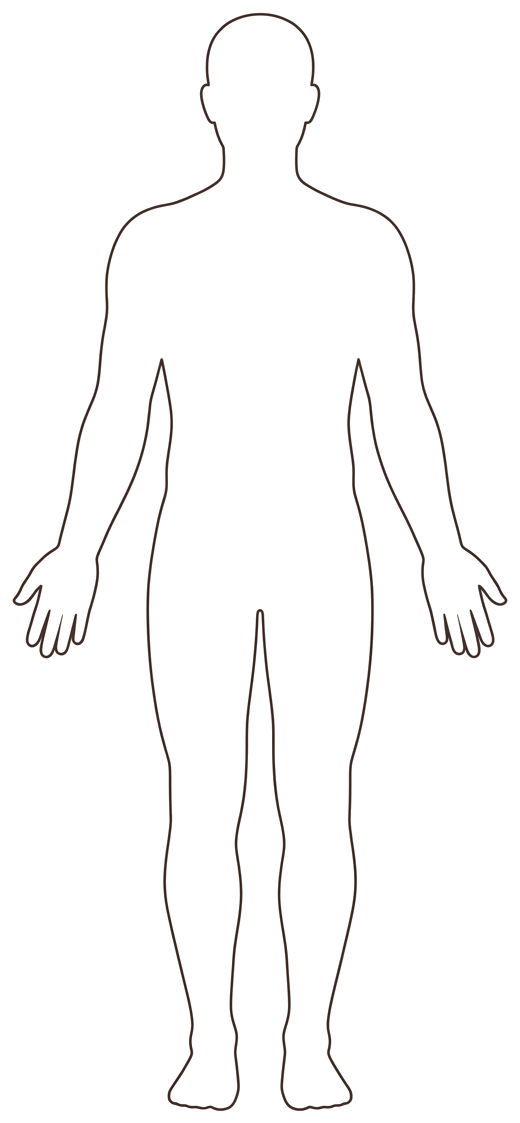
The easiest spots are the belly (about 2 inches either side of the navel), the love handles, the front of the thigh, and the back of the upper arms. Rotate every injection.
Don't do the math, let the calculator do it.
This is ARA-290's typical setup, already worked out. Change any value and the draw updates instantly.
Typical ARA-290 dose: about 4 mg once daily, the dose used in the sarcoidosis trials, run for roughly 4 weeks at a time. It's run in focused cycles, not continuously.
How to cycle ARA-290.
How long people run ARA-290, when to take a break, and the honest reasoning behind it.
Run in focused courses.
A cycle just means a defined run of time on the peptide, followed by a break. For ARA-290 the common pattern follows the trials: roughly four weeks of daily dosing, then time off, rather than running it indefinitely.
Why not just run it forever? Mostly because the long-term human safety data does not exist yet. The trials lasted weeks to a few months, not years, so the cautious approach is a focused block, then stop.
- Hold the daily schedule through your block, at roughly the same time each day.
- Anchor to the trial dose rather than escalating, since 4 mg was the dose that performed best in testing.
- Take a real break after a cycle before considering another. If symptoms return, that is a conversation for a licensed provider.
Want the full picture, on and off periods, the washout, stacking, and keeping your results? Read how peptide cycling works →
What's actually in the vial.
For one of these vendors we link the per-batch certificate itself, and the purity below is read straight off it. The rest link to the vendor's general lab-results page. We don't run the labs ourselves and we don't show a purity number unless it's printed on a certificate we link, so you can open the document and check it against the batch yourself.
| Vendor | Purity (per COA) | Batch / report | Certificate |
|---|---|---|---|
| EZ Peptides | 99.827% | EZP-ARA1005192026-03 | Janoshik report ↗ |
| Penguin Peptides | see lab page | not shown | Lab results ↗ |
What people pair it with.
ARA-290 is often paired for nerve and tissue repair. These are the combinations the community reaches for.
Neuropathy & recovery
The repair-focused pair people run for nerve pain. ARA-290 works on the innate repair receptor and small nerve fibers; BPC-157 adds local soft-tissue and gut support. Different mechanisms aimed at the same recovery goal.
View stack →Inflammation & tissue
ARA-290 quiets inflammation through the innate repair receptor, while TB-500 is run for whole-body recovery and mobility. People reach for this when both nerve discomfort and soft-tissue recovery are in play.
View stack →Nerve & rest
ARA-290 for the nerve and inflammation angle, DSIP for the sleep-and-recovery side. Some people pair them when poor sleep is part of the picture, though the DSIP evidence is thin.
View stack →In the same corner.
Other healing and recovery peptides people compare against ARA-290.
Questions, answered straight.
Is ARA-290 legal?
ARA-290 isn't an approved drug, and it isn't sold for human use. The vendors we compare offer it strictly for research use only. It holds FDA orphan-drug status for sarcoidosis nerve pain but never reached approval. Rules vary by country, so check what applies where you are.
What does research use only actually mean?
It means the product is sold for laboratory and research purposes, not as a supplement or medicine for people. It hasn't been reviewed or approved for human use by the FDA. We aggregate prices and public lab data so you can see the landscape; what you do with that is between you and a licensed provider.
How do I store it?
Keep the sealed, freeze-dried vial in the fridge, and out of direct light. Once you mix it with bacteriostatic water, store it refrigerated and use it within a few weeks. Don't freeze a reconstituted vial.
How often do people dose it?
The clinical trials used 4 mg once daily for about four weeks. People tend to copy that, running a focused daily block rather than dosing indefinitely. Use the calculator to turn your vial and dose into exact units.
Is ARA-290 the same as EPO?
No. ARA-290 is built from the tissue-protective region of erythropoietin but was deliberately engineered to drop the blood-building effect. It does not raise red blood cell count the way EPO does; it targets the innate repair receptor instead.