NAD+
NAD+ is a coenzyme your cells use to make energy and repair DNA, and levels fall as you age. People run it for energy, recovery, and healthy aging, often alongside other longevity compounds like MOTS-c and Epitalon.
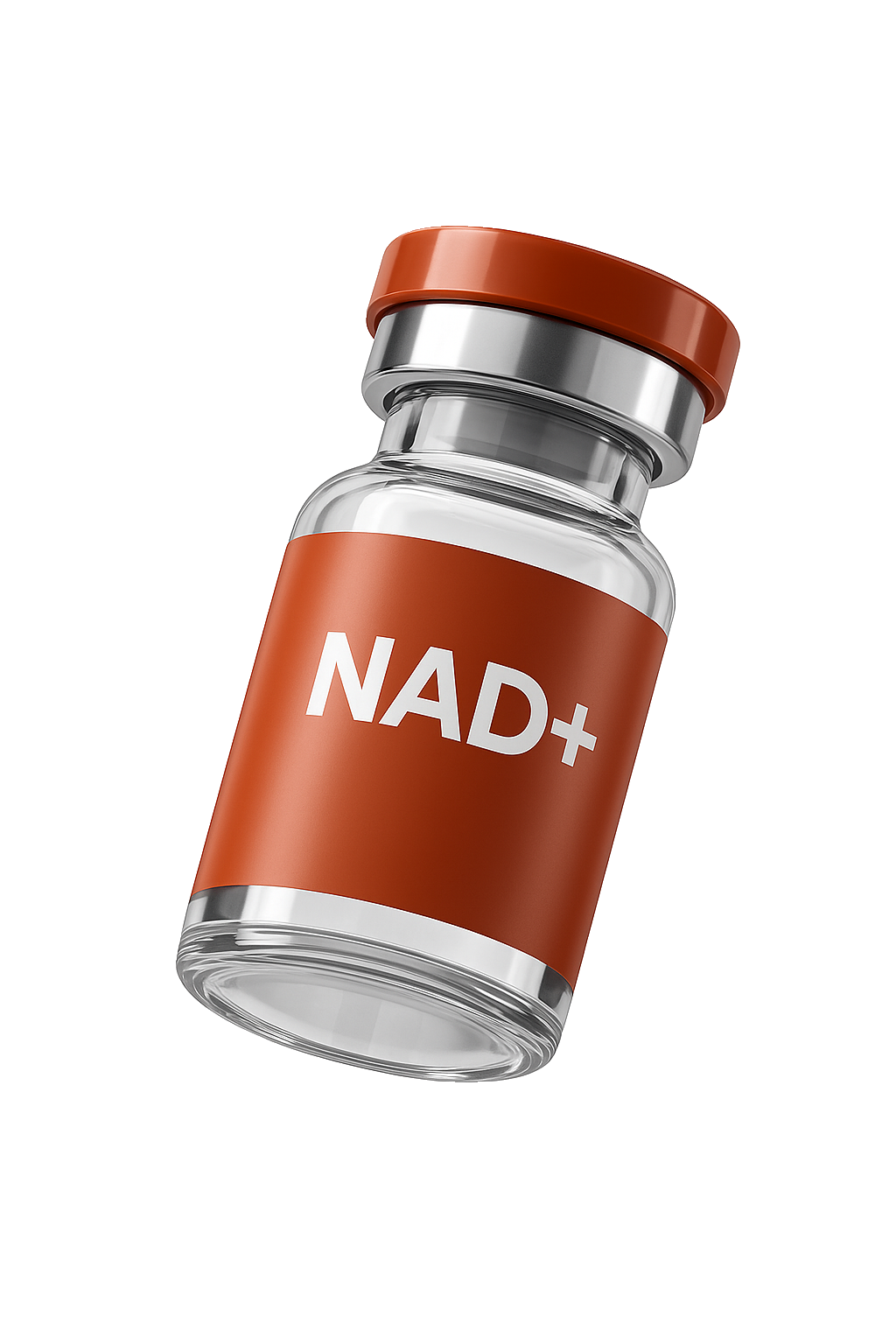
Where to buy NAD+, cheapest first.
Prices from 8 vendors across the market. We link straight to each vendor’s product page and grade vendors on public lab data, so you’re not just chasing the lowest number.
NAD+
What NAD+ actually does.
The simple version first, then a little more for the curious. No biochem degree required.
It tops up a molecule your cells run low on as you age, the one that powers your mitochondria and fuels DNA repair, so the cellular machinery that keeps you running has more fuel to work with.
How it works
NAD+ (nicotinamide adenine dinucleotide) is a coenzyme involved in hundreds of reactions. It shuttles electrons in the mitochondria to make ATP, the energy currency of the cell, and it is the fuel that DNA-repair enzymes and sirtuins burn to do their jobs.
Where it acts
It works inside cells throughout the body, with the clearest interest in tissues with high energy demand like muscle, brain, and nerve. Sirtuins, the longevity-linked proteins, only function when NAD+ is available, which is why it sits at the center of aging research.
What people notice
People report more steady energy, sharper focus, and easier recovery over a course of injections. Effects are usually described as gradual rather than a jolt. Reports vary widely between individuals.
Honest caveat: the cell biology of NAD+ is well established, but the evidence that injecting it produces lasting anti-aging benefits in healthy people is thin and mostly preliminary. Much of the human work is small, short, or in specific disease settings. It is not an approved medicine and is sold strictly for research use only. None of this is medical advice, talk to a licensed provider before starting anything.
How to take it.
NAD+ is given as an injection, most commonly subcutaneously into fat with a tiny insulin needle. The other common route is a slow IV infusion in a clinic, which delivers more at once but takes hours. For at-home use the subcutaneous shot is what people run; the routine is below, and the full guide covers cycling and timing.
Reconstitute the vial
Add bacteriostatic water down the side of the vial (a 500mg vial + 3mL = about 167mg/mL). Let it dissolve. Swirl gently, don't shake. Inject slowly, NAD+ can sting if pushed fast.
Draw your dose
On a U-100 insulin syringe, pull to your unit mark. 50mg at 167mg/mL is about 30 units (0.3mL). Start low, NAD+ often causes flushing or nausea if you go too high too fast. Use the calculator if you're unsure.
Pinch and inject
Swab with alcohol, pinch a bit of fat, insert at 45–90°, and push slowly, over 30 to 60 seconds. Going slow is the single biggest thing that reduces the warm, flushed, or queasy feeling.
Rotate your sites
Move to a different spot each time so no area gets sore or lumpy. Store the vial in the fridge between doses and use within about two weeks.
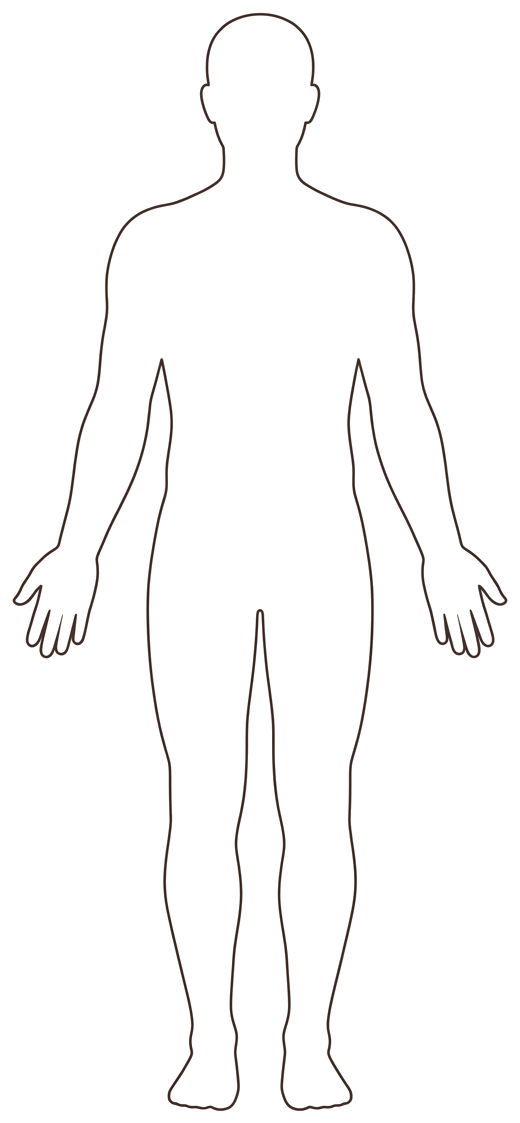
The easiest spots are the belly (about 2 inches either side of the navel), the love handles, the front of the thigh, and the back of the upper arms. Rotate every injection.
Don't do the math, let the calculator do it.
This is NAD+'s typical setup, already worked out. Change any value and the draw updates instantly.
Typical NAD+ dose: about 50 to 100 mg subcutaneously, two to three times a week, run in courses of roughly 8 to 12 weeks. Many people start at 50 mg and build up slowly, since pushing too high too fast brings on flushing and nausea.
How to cycle NAD+.
How long people run NAD+, when to take a break, and the honest reasoning behind it.
Run as periodic courses.
A cycle just means a defined run of time on the compound, followed by a break. For NAD+ the common pattern is a course of roughly 8 to 12 weeks of injections, then either a break or a stretch of oral precursors, rather than injecting indefinitely.
Why not just run it forever? Mostly because the long-term human safety data on injectable NAD+ does not exist yet. The cautious and widely followed approach is to run a focused course, then ease off.
- Hold a steady schedule through your course, two to three times a week at roughly even spacing.
- Bridge rather than binge. If you want continuity, step down to oral NMN or NR between courses instead of pushing the injections higher.
- Take a real break after a course before starting another. If your goals or symptoms change, that is a conversation for a licensed provider.
Want the full picture, on and off periods, the washout, stacking, and keeping your results? Read how peptide cycling works →
What's actually in the vial.
For 5 of these vendors we link the per-batch certificate itself (a specific lab report, COA PDF, or certificate image), and the purity below is read straight off that certificate. The rest link to the vendor's general lab-results page. We don't run the labs ourselves and we don't show a purity number unless it's printed on a certificate we link, so you can open the document and check it against the batch yourself.
| Vendor | Purity (per COA) | Batch / report | Certificate |
|---|---|---|---|
| EZ Peptides | see COA | EZP-NAD500050252026-18 | Janoshik report ↗ |
| Next Gen Peptides | 99.82% | ND-16 | COA (PDF) ↗ |
| Midwest Peptide | 99.79% | MPNAD003 | View COA ↗ |
| Onyx Biolabs | 99.272% | NAD500-26032A | View COA ↗ |
| Penguin Peptides | see lab page | not shown | Lab results ↗ |
| Amino Club | 99.67% | NAD0001 | COA (PDF) ↗ |
What people pair it with.
NAD+ is often paired with other longevity compounds. These are the combinations people reach for when healthy aging and cellular energy are the goal.
Mitochondria & aging
The mitochondrial pairing. NAD+ fuels energy production and DNA repair, while MOTS-c is a mitochondrial-derived peptide studied for metabolism and exercise capacity. Run together for the cellular-energy angle.
View stack →Anti-aging base
A broad longevity protocol. Epitalon is studied for telomeres and the body clock, MOTS-c for mitochondrial metabolism, and NAD+ for the energy and repair currency that ties them together.
View stack →Mitochondrial support
Both target the mitochondria. SS-31 is studied for protecting the inner mitochondrial membrane, while NAD+ refuels the energy reactions that run there. A pairing for people focused on cellular energy.
View stack →In the same corner.
Other longevity and cellular-health compounds people compare against NAD+.
Questions, answered straight.
Is NAD+ legal?
NAD+ is a naturally occurring coenzyme, but the injectable research vials we compare are not approved drugs and are sold strictly for research use only. Some clinics offer IV NAD+ through licensed providers, which is a separate, supervised setting. NAD+ itself is not on WADA's prohibited list, but rules vary by country, so check what applies where you are.
Is NAD+ a peptide?
Not technically. NAD+ is a coenzyme, a small molecule built from two nucleotides, not a chain of amino acids. It gets grouped with peptide protocols because it is sold and used in the same injectable, research-use format, and because it sits at the center of the same longevity conversation.
Why does the injection sting or make me flush?
NAD+ commonly causes a warm, flushed, or slightly queasy feeling, especially at higher doses or if you inject quickly. The fix most people use is to start at a low dose, around 50 mg, and push the plunger very slowly over 30 to 60 seconds. The feeling usually fades within minutes.
How do I store it?
Keep the sealed, freeze-dried vial frozen or refrigerated and out of light. Once you mix it with bacteriostatic water, store it refrigerated and use it within about two weeks. Don't freeze a reconstituted vial, and protect it from light.
Subcutaneous or IV?
Subcutaneous injection is the practical at-home route and what most people run, in the 50 to 100 mg range a few times a week. IV infusion delivers far more in one sitting but takes hours and is done in a clinic. Oral NMN or NR is a different, gentler approach some people use to bridge between injectable courses.